Why You Feel Emotionally Drained (Even When Nothing Is Wrong)
You go through your day, you do what you need to do, you answer messages, solve problems, handle responsibilities. And still, underneath everything, you feel emotionally drained, and you are so exhausted that sleep cannot even fix it.
And what makes it even more confusing is that sometimes nothing seems to be wrong. No major crisis or dramatic breakdown, you still cannot really explain why you feel emotionally exhausted. “Maybe I work too much, or just simply do too much” – you could assume.
Emotional drain, however, is not so much about activity, it’s about emotional load. It’s about how much tension your nervous system is carrying internally all the time. Because some people don’t just move through life, they monitor it constantly.
Are You Emotionally Drained or Mentally Exhausted?
The signs of emotional exhaustion are very similar to those of mental exhaustion, and the root cause of the two patterns is often similar as well – not feeling emotionally secure. The way the two patterns show up later however is slightly different.
If you wanted to sum up the underlying motifs in one sentence, you could say:
“I am only safe / loveable / valuable if I adapt to my environment.”
Or:
“I cannot afford to put myself first.”
This results in lack of boundaries, staying always available and ultimately, feeling of emptiness and burnout.
Mental drain, on the other hand, focuses on maintaining constant high performance and control, resulting in a cognitive overload in the long run. In practice, your mind is running 24/7, you might overthink and overanalyze things. Mental drain often appears as:
- “I must do it right”
- “No mistakes are allowed”
- “I need to think in advance”
- “I have to solve this”
- “I am valuable if I perform well”
Emotional drain, however, focuses on emotional safety and managing other people’s emotional state. You constantly feel like:
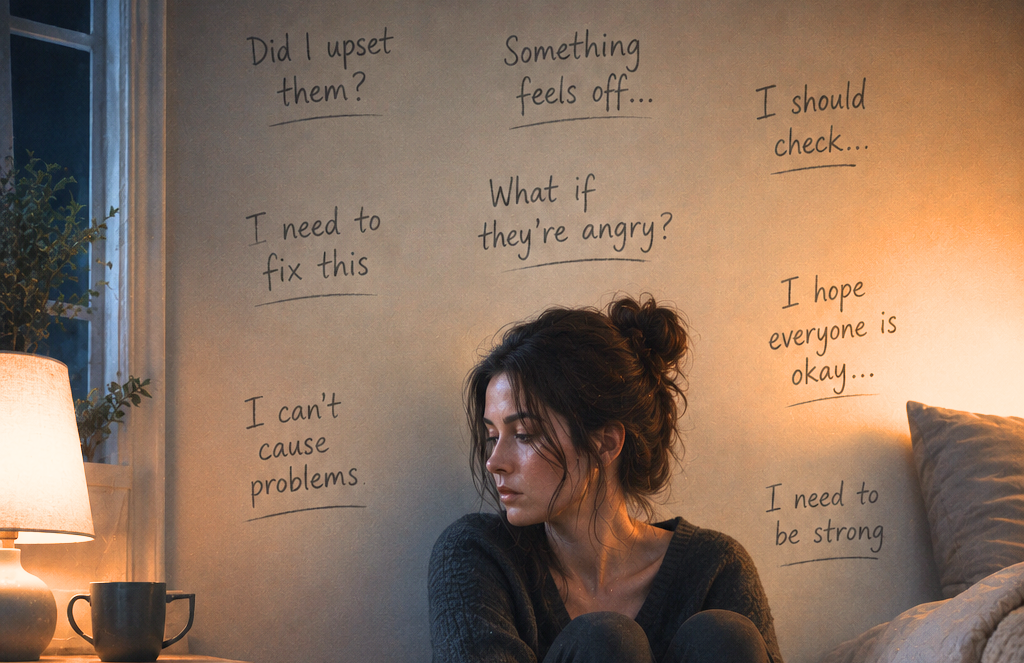
- “I cannot cause a problem”
- “I have to calm them down”
- “I must pay attention to others”
- “I am only loveable if I put others first”
- “I am only safe if others feel good”
If you stay in any of these alert modes for long, your system may start feeling numb and empty and may begin to experience signs commonly associated with burnout.
In many cases, emotionally exhausted people learned early that staying alert was the safest option.
As a result, they adapted and learned to:
- pay attention
- anticipate problems
- notice emotional shifts quickly
- stay prepared
- avoid fully letting their guard down
Signs You’re Emotionally Drained
In practice, you notice everything. The mood shifts, the tension in conversations, the subtle changes in someone’s tone. And your first reaction is that something might go wrong. To prevent this, you begin emotionally managing the environment around you. Trying to keep things stable, smooth, safe, under control. Sometimes by helping, sometimes by anticipating, or simply by staying emotionally “on” all the time.
And that constant readiness slowly leads to emotional burnout.
The Reason Why You Feel Emotionally Drained
Maybe you grew up in an unpredictable environment, or you learned to adapt quickly to emotional changes around you. Maybe staying emotionally aware helped you avoid conflict, disappointment, rejection, or chaos. This resulted in your system having connected safety with constant emotional monitoring.
The problem is that in many cases your body may still be running that old survival strategy long after the danger is gone, and eventually, living in constant readiness may lead to feeling emotionally drained.
Physical Signs of Emotional Exhaustion: Your Body Is Trying to Tell You Something
When emotional exhaustion lasts long enough, your body often starts showing the signs before you become aware of your burnout. Not because your body is weak, but because your nervous system was never meant to stay emotionally alert all the time.
While physical symptoms might vary individually, in general, the signs of emotional burnout can show up as tension, frequent sighing, fatigue, sleep issues, or a constant sense of overwhelm. If you feel symptoms in your body, please don’t ignore them, take them seriously, and signal your body that you are safe for example, as below.
However, while grounding and calming techniques may help regulate stress and emotional overwhelm, persistent or concerning physical symptoms should always be taken seriously and discussed with a healthcare professional.
How to Help Your Body Step Out of Emotional Readiness
When you feel emotionally exhausted, don’t start by trying to “fix” your thoughts, first, help your body feel safer.
Look slowly around the room and notice a few neutral things around you: the light, the walls, the chair beneath you and the feeling of your feet touching the floor.
Then take a slower breath than usual. And as you exhale, remind yourself:
“Nothing needs solving in this exact moment.”
Practical Shifts That Actually Help
1. Ask Yourself: “Is This Mine to Carry?”
Emotionally drained people often absorb things automatically. Other people’s stress, moods, reactions.
So before stepping in emotionally, pause and ask: “Is this actually mine to carry?”
Not everything that affects you is your responsibility to solve. And recognizing that creates emotional space.
2. Reduce Emotional Monitoring
Pay attention to how often you scan the emotional environment around you.
For example:
- checking if someone is upset
- analyzing someone’s tone repeatedly
- trying to prevent discomfort
- automatically adjusting yourself to keep things smooth
Now compare that to how often you ask:
“What am I feeling right now?”
This shift matters.
Because emotional exhaustion often happens when you become more connected to everyone else’s emotional state than your own.
3. Create Small Moments Where Nothing Needs Managing
Provide your nervous system experiences where nothing is required from you. No productivity, no emotional regulation, no fixing, no anticipating.
Even small moments matter, such as:
- sitting quietly without checking your phone
- taking a short walk without mentally solving problems
- letting a message wait a little longer
- resisting the urge to re-check something one more time
Because your system slowly learns that nothing bad happened when you stopped monitoring everything.
4. Predictable Routines As Safety Signals
Many emotionally drained people spend so much energy stabilizing others that they never create stability for themselves.
Simple routines can help signal safety to your body:
- the same calming music
- consistent evening routine
- warm drink
- a familiar walk
- softer lighting at night
- slowing your breathing intentionally
These are signals to your nervous system that it can begin to stand down.
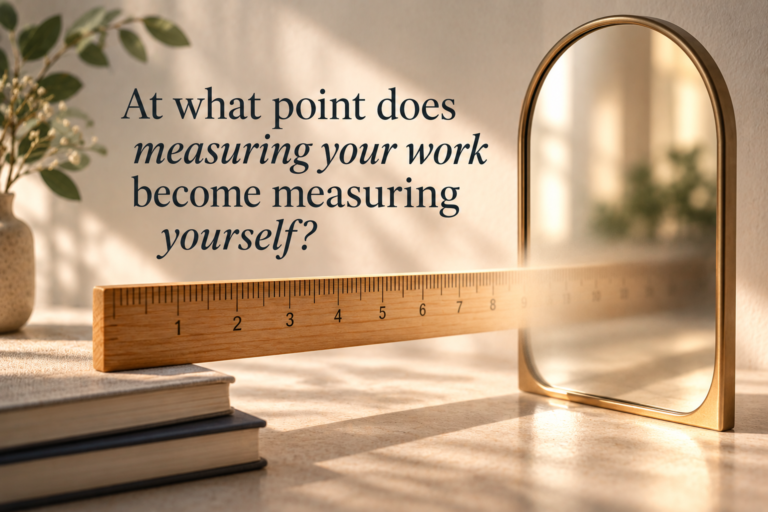
5. Stop Measuring Your Worth Through Emotional Availability
This is a hard one, because many emotionally exhausted people unconsciously believe such as:
- “If I stop helping, I’m selfish.”
- “If I stop carrying things, I’m letting people down.”
- “If I don’t stay emotionally available, something will go wrong.”
But constant emotional availability is not the same as love, care, or responsibility. You are not responsible for how other people feel about everything.
You are allowed to have limits. It’s a basic human need that you cannot (and maybe should not) ignore.
Reflection When You Feel Emotionally Drained
You may even take them as journal prompts:
What am I emotionally carrying right now that was never truly mine?
Who would I be if I no longer had to stay emotionally alert all the time?
If this resonates with you, you may also want to explore why you feel responsible for everything, why overthinking keeps your mind stuck in loops, and the quieter signs of burnout.
AI Transparency : At SelfWorkNotes, we use generative AI as a collaborative tool during the research, writing and creative process. Every article is carefully reviewed, edited and finalized by the author, who remains fully responsible for the published content. Unless otherwise stated, illustrations are created using generative AI.
Gentle reminder: The content on SelfWorkNotes is provided for informational and educational purposes only. It does not constitute medical, psychological, legal or financial advice. Always consult a qualified professional regarding your personal situation.