Why Failure Feels So Scary: The Psychology Behind Fear of Failure
Have you ever avoided something because the fear of failure felt scary? Maybe you’ve postponed applying for a new job, delayed launching a project you’ve been dreaming about, or avoided speaking up in a meeting. Or, you decided not to try at all because failing somehow felt worse than wondering what might have happened.
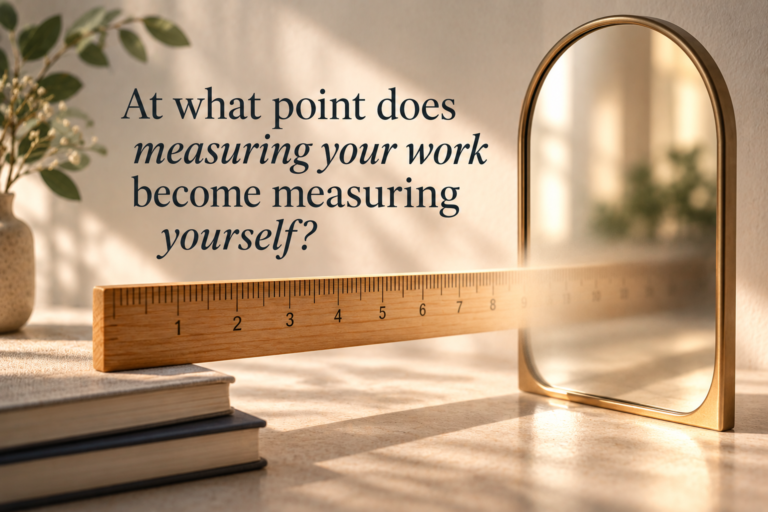
From the outside, fear of failure can look like procrastination, perfectionism, or a lack of confidence. But psychologically, it often isn’t failure itself that we’re trying to avoid. It’s what we believe failure would say about us.
What Is Fear of Failure?
It isn’t simply the fear of making mistakes.
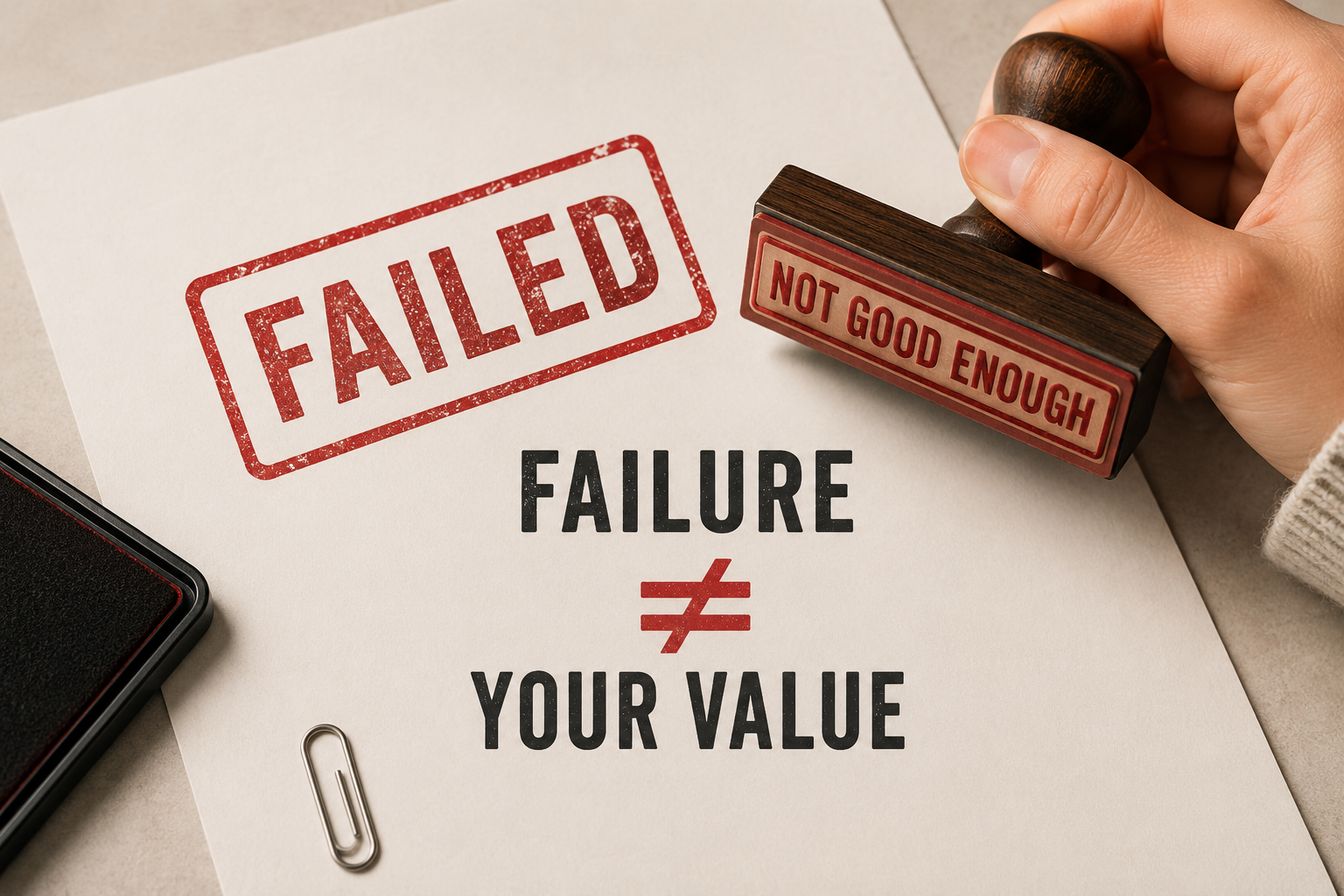
Fear of failure is the anticipation that failing will lead to emotional pain, such as shame, rejection, self-doubt, or loss of self-worth. While failure itself is an event, the fear often comes from what we believe it would mean about us.
Why Does Fear of Failure Feel So Strong?
There isn’t one universal explanation. The same behavior can be driven by very different psychological patterns.
Two people may both avoid applying for the same promotion.
One fears criticism, the other fears disappointing others.
Someone else believes they must perform perfectly.
Another person simply cannot tolerate not knowing how things will turn out.
The behavior looks similar, but the underlying pattern may be completely different.
Such patterns can be:
Self-worth
“If I fail, maybe it means I’m not good enough.”
Failure becomes a threat to identity.
Self-confidence
“What if I’m not capable enough?”
Sometimes the fear isn’t about your value as a person, it’s about doubting your own ability.
You may have the necessary skills, experience, or knowledge, yet still hesitate because your mind focuses on what you might not be able to do. In those moments, the problem often isn’t your actual competence, but your confidence in using it.
Confidence often doesn’t come before action. It grows through action and experience.
(This idea is consistent with Bandura’s theory of self-efficacy, which suggests that confidence develops primarily through mastery experiences rather than preceding them.)
Perfectionism
“If I can’t do it perfectly, I shouldn’t do it at all.”
Failure becomes unacceptable.
Emotional Safety
“What if people judge me?”
Failure feels emotionally unsafe.
Fear of Rejection
“What if they don’t choose me?”
Failure feels like losing connection.
Need for Certainty
“I don’t know how things will unfold.”
Failure becomes one possible future your brain desperately wants to avoid.
None of these explanations automatically apply to everyone, and sometimes several of them work together.
In this article, we’ll focus on one particularly common pattern: our brain’s need for certainty.

Fear of Failure and the Need for Certainty
Imagine you’re thinking about applying for a new position.
You don’t know how the interview will go, or whether you’ll get the job.
From your brain’s perspective, every unanswered question represents uncertainty and trying suddenly feels risky because the outcome is unknown.
Sometimes, avoiding failure isn’t really about avoiding failure itself.
It’s about avoiding uncertainty.
If you never apply, you never have to find out.
For a little while, your brain feels safer, but please always remember:
Not trying may temporarily protect you from experiencing failure.
But it also protects you from discovering what you are actually capable of.
Sometimes the only thing standing between you and greater confidence is evidence you never allowed yourself to collect.
Not just from success outcomes in different situations, but sometimes also in seeing your real value.
The Hidden Meaning Behind Failure
Here’s a question that often changes the whole perspective.
What would failure actually mean to me?
Not: “What if I fail?”
But: “If I failed, what would I believe about myself?”
The answer is often surprisingly revealing.
Maybe it says:
“I’m not capable.”
“I’m not smart enough.”
“I’ll disappoint everyone.”
“I’ll never succeed.”
These aren’t descriptions of failure, they’re interpretations.
Sometimes it’s not the failure itself that hurts most, but the meaning our mind immediately attaches to it.
The Hidden Cost of Fear of Failure
The problem with the fear of failure is that it doesn’t only make us expect negative outcomes, it also narrows our attention. Your brain can become so focused on possible negative outcomes that it often stops seeing what positive things you can get from the situation.
In other words, your brain can consistently overestimate the unknown and underestimate your ability to deal with it. The more uncertain a situation feels, the more your attention can narrow toward possible threats, while your own ability to cope often fades into the background.
This isn’t about unrealistic optimism, it’s about seeing the situation more completely, and let’s be honest, often more realistically, as well.
Staying with the job application example: you don’t dare or want to try it saying: “What if they don’t choose me?” “What if I wouldn’t be good enough?”, your attention is more focused on the negative possibilities, while it might be worth keeping also in mind what the new opportunity might also bring: new skills, supportive colleagues, financial growth, confidence, unexpected opportunities.
Shifting your focus from the negative to the potentially positive gains, won’t remove the possibility of the negative outcome, but can help you getting a more balanced, and perhaps a more realistic view of the situation.
How to Overcome Fear of Failure?
1. Look Beyond the Outcome
The next time you notice yourself fearing failure, try asking:
What do I believe failure would mean about me?
Sometimes the answer has very little to do with the actual situation.
And much more to do with self-worth, criticism, rejection, or emotional safety.
Understanding the meaning your brain attaches to failure often explains the fear much better than the event itself.
2. Reduce the Size of the Unknown
Fear of failure often makes a situation feel much bigger than it actually is, and your brain can immediately jump to everything that could come after it, making the situation seem more overwhelming than it might actually be.
Imagine you’re thinking about applying for a new job.
Your mind may already be picturing that it takes:
- updating your CV
- writing a cover letter
- multiple interviews
- learning a new role
No wonder it feels so overwhelming, that you finally say: “Nah, I don’t even feel like doing it”
But instead of asking yourself to complete the tasks at once, reduce the size of the unknown.
Perhaps today you simply open your CV and just update one section. Tomorrow, you finish updating the document. The next day you submit a single application.
You don’t need certainty about every future step before taking the first one. Very often, your brain only needs enough clarity to begin.
3. Replace Prediction with Resilience
Fear of failure often begins with trying to predict an uncertain future. And yes, failure can happen, of course. But resilience can help you cope with it even if that’s the outcome.
Ironically, you can ask the same question from very different places and with very different tonality:
Fear of failure asks from in a frightened voice: “What if I fail?”
Resilience shrugs: “What if I fail?” and asks further: “Then what will I do?”
This doesn’t mean being reckless or not caring. You still might want to prepare for possible challenges and failures.
But resilience can help you to face these from a much healthier and grounded place, because it can help you recall similar successes from the past:
“What evidence do I have that I’ve handled difficult situations before?”
Even if failure happens, it doesn’t automatically mean you’re incapable. It simply means you’ll have new information about what to improve next.
Final Thoughts
Fear of failure isn’t always about failure itself, it’s often about the meaning our brain expects failure to carry.
Sometimes it’s uncertainty, sometimes it’s self-worth, other times it’s emotional safety. Sometimes all of them together.
The next time fear tells you not to try, perhaps ask yourself one final question:
“What would failure really mean to me?”
Sometimes, the answer reveals far more than the fear itself.
Related Patterns
- Need for Certainty (related article)
- Why Your Brain Mistakes Certainty for Safety (related article)
- Avoidance Isn’t Laziness (related article)
- Overthinking Isn’t the Real Problem (related article)
- Self-Worth (related article)
- Perfectionism (related article)
Further Reading
If you’d like to explore the research behind this topic:
- Bandura, A. (1977). Self-efficacy: Toward a Unifying Theory of Behavioral Change.
- Baumeister, R. F., Bratslavsky, E., Finkenauer, C., & Vohs, K. D. (2001). Bad Is Stronger Than Good.
AI Transparency : At SelfWorkNotes, we use generative AI as a collaborative tool during the research, writing and creative process. Every article is carefully reviewed, edited and finalized by the author, who remains fully responsible for the published content. Unless otherwise stated, illustrations are created using generative AI.
Gentle reminder: The content on SelfWorkNotes is provided for informational and educational purposes only. It does not constitute medical, psychological, legal or financial advice. Always consult a qualified professional regarding your personal situation.