When Everything Falls Apart, What Still Remains?
Why may your invisible assets matter more than your visible achievements?
Imagine someone who spent years building a successful business. Then one day, it fails.
The company closes; the income disappears. From the outside, it can look as though everything they worked for has vanished overnight.
Now imagine someone else who loses their job after years at the same company. Or a relationship ends. Or a long-term project they’ve poured themselves into simply doesn’t work out.
Although these situations are different, they often leave people asking the same question: “What do I have left now?”
Because when something we’ve invested years into suddenly disappears, it rarely feels like we’ve only lost a job, a business, or a relationship. It often feels as though we’ve lost a part of ourselves. We might even start feeling as though we’ve lost our worth.
But perhaps there’s another question worth asking:
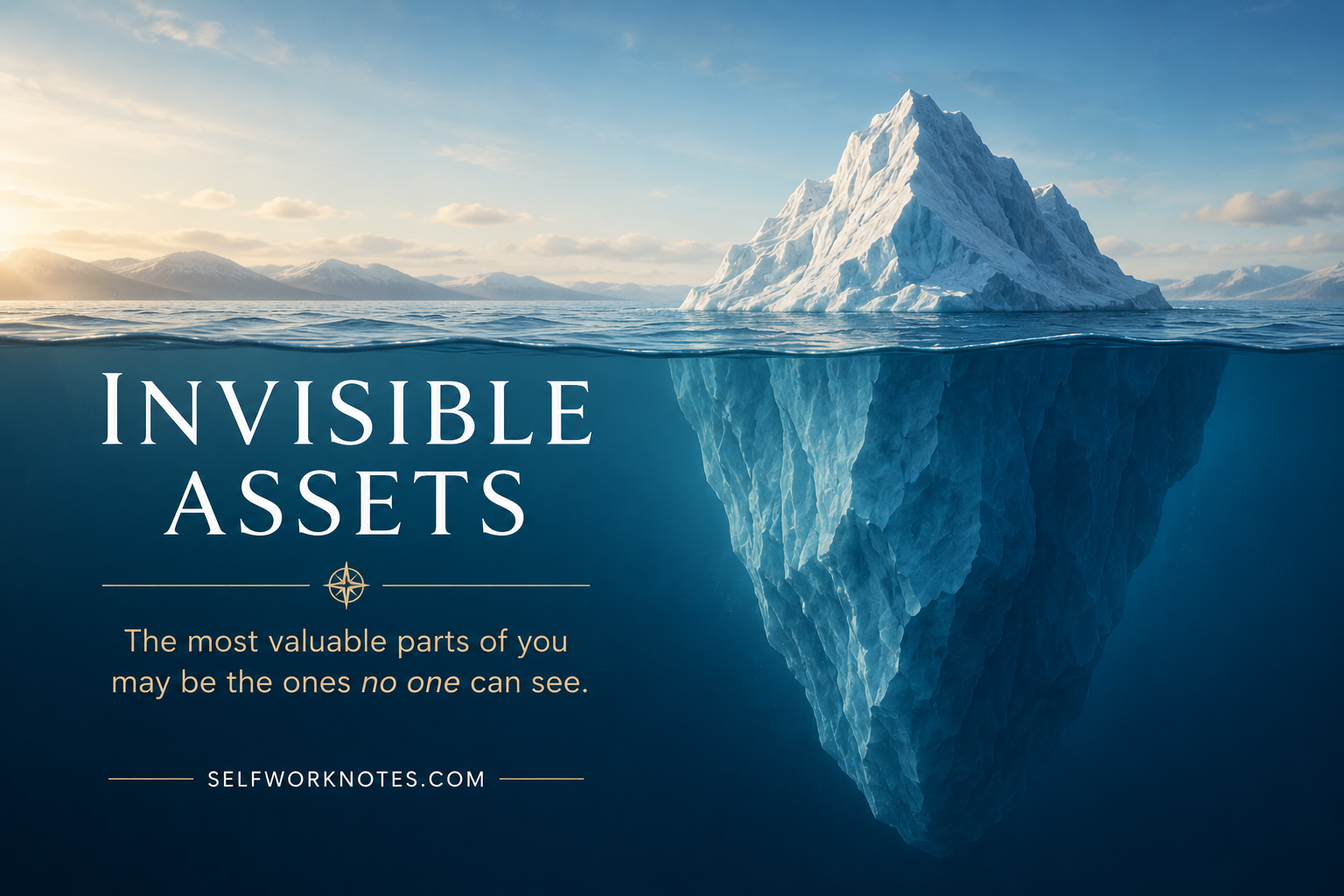
Did everything really disappear? Or did the visible results disappear, while your invisible assets quietly remained?
The Result Is Easy to See. The Invisible Assets Often Aren’t.
When we look back at our achievements, we usually notice the outcomes. A promotion, a successful business or a project that went well, a degree, a home we renovated, people we helped.
These are the things we show as tangible results, even sometimes to other people, as well. We can point to them, because they’re visible. Measurable.
But behind every visible result, something less visible has usually been working all along: the abilities and values that made the outcome possible in the first place.
And perhaps this is where we sometimes overlook something incredibly important. We become so focused on what we created that we forget to notice the invisible assets that allowed us to create it.
Outcomes Can Disappear. The Source Often Remains.
Imagine someone who has been running a holiday apartment.
At first glance, it may not seem particularly remarkable, they “just rent out an apartment.” Simple. Okay, we might acknowledge that it takes a lot of hard work to run it, administration, cleaning, complying with the regulations, just to mention a few of the tasks.
But let’s zoom out for a moment.
To make that business work, they may have learned how to understand regulations, communicate with guests, solve unexpected problems, manage finances, make decisions, coordinate repairs, organize schedules, market the property and create an experience people wanted to return to.
From the outside, it looked like they were simply renting out a holiday home. In reality, they were building dozens of different abilities at the same time.
Now imagine that, for whatever reason, the business comes to an end. The apartment may no longer be rented out. Of course, the owner might think that they lost a lot. Money, effort, time they invested, and even maybe their sense of their worth: “I wasn’t good enough in this”.
What about everything that made it possible? Communication skills, decision-making, problem-solving, organization, and resilience. Those didn’t disappear together with the business. The outcome disappeared, the invisible assets that created it, however, remains.
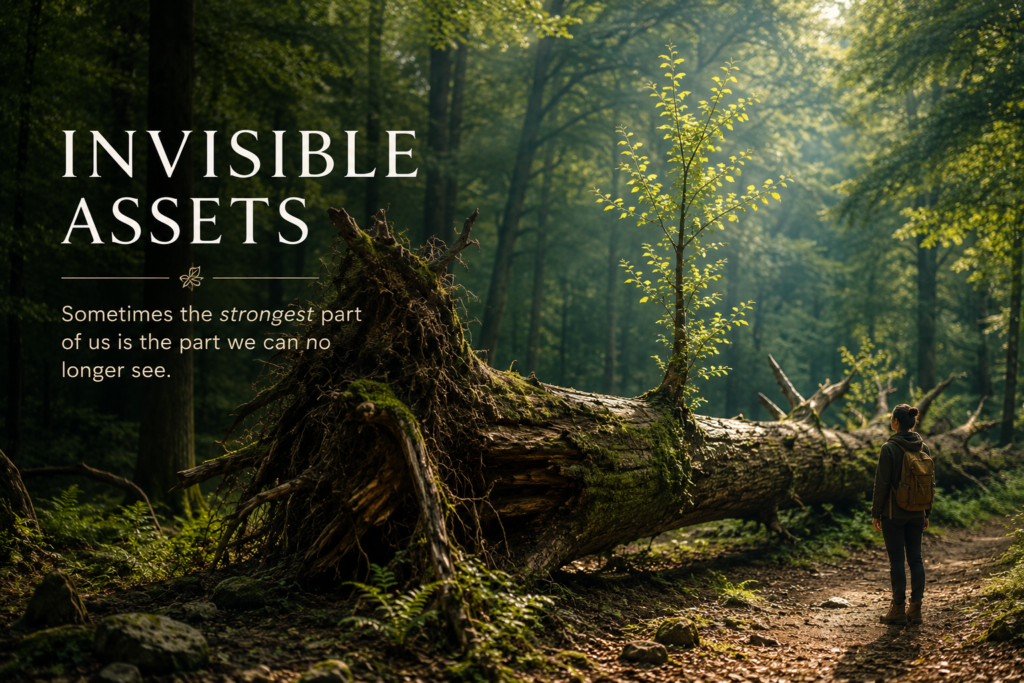
Invisible Assets
One reason these abilities often go unnoticed is because they rarely feel extraordinary to the person who has them. In fact, they often feel completely ordinary.
Perhaps you naturally start conversations with strangers. Or you always remember people’s names. Maybe you instinctively notice when something doesn’t quite add up, or you enjoy organizing things simply because it feels satisfying.
You probably don’t think much of these things. Why would you? They come naturally. And that’s exactly why they’re so easy to overlook.
Sometimes, the abilities that shape our lives the most are the ones that feel the least remarkable to us. Not because they’re unimportant, but because we’ve had them for so long that they no longer feel like abilities at all. They simply feel like “that’s just who I am.”
Zoom Out Thinking
One of the easiest mistakes we make is focusing on individual qualities instead of asking a much more interesting question:
What do these qualities allow me to do?
A good sense of humor may simply seem like a personality trait.
But perhaps it also helps people relax around you, build trust more quickly, navigate difficult conversations, create opportunities that wouldn’t have existed otherwise.
The humor wasn’t the outcome. It was part of the source.
The same can be true for curiosity, patience, or being someone people naturally open up to.
On their own, these qualities may seem ordinary. Together, they begin revealing your invisible assets.
Your Achievements Are Clues, Not the Final Values
One of the easiest ways to discover your invisible assets can be to stop looking at your achievements as finished stories and treat them as clues that can help you discover your invisible assets.
So, after you’ve listed what you have achieved, it’s worth also asking what made those achievements possible? What helped you reach those?
Perhaps you had to earn a degree. What helped you get there? Discipline? Curiosity? Persistence?
Or let’s say, you built a business. Was the business the greatest achievement?
Of course, you might answer.
But what if your traits, skills, that made it possible are even more valuable? Because even when that business is about to collapse, you still have a lot of resources to lean on. Either to save your business, or to start a new one from scratch if everything falls apart.
Your Brand Already Exists
Easier said than done, but how do you put this all into practice in a critical situation? One way to make these invisible assets easier to see is to imagine them as the foundation of a personal brand.
Let me invite you for a thought experiment. Grab a notebook and a pen(cil), as well. The good news is that you can apply the logic below to almost all the areas of your life: career, work, relationships, maybe even everyday situations, as well, where you need a solution.
Imagine you’re building a personal brand. You can even name it after yourself.
Ask yourself:
How would people describe this brand? What values, qualities, traits would it have? What would make it different from every other brand?
If your brand had a tagline, what would that be? What would people trust this brand for? What promise would this brand always keep? What would people consistently experience when interacting with it?
Those answers may reveal far more about your invisible assets than any list of achievements ever could.
Final Reflection to See Your Invisible Assets
Perhaps you’ve spent years measuring yourself through outcomes: degree, salary, promotions, relationships.
Today, try asking a different question.
Instead of: “What have I achieved?”
Ask: “What in me made those achievements possible?”
Write down your invisible assets instead of your achievements. Not the outcomes, but the invisible assets underneath them.
Then ask yourself one final question.
“Which of these would still remain true about me if my current role, job or circumstances changed tomorrow?“
You may be surprised how much remains.
Final Thoughts
Life changes. Jobs end, businesses fail, relationships sometimes come to an end, plans don’t always work out.
Those experiences can be painful, but often, they don’t tell the whole story. Because while outcomes may disappear, the person who created them usually remains.
The curiosity that kept learning, the courage that made difficult decisions, the resilience that kept going, the kindness and humor that built relationships.
Your invisible assets rarely disappear overnight, even when your circumstances do.
Perhaps they’ve been quietly accompanying you all along. You simply became so used to them that you stopped seeing them.
And maybe that’s where self-worth slowly begins to change. Because, for the first time, you begin noticing who has been there all along.
AI Transparency : At SelfWorkNotes, we use generative AI as a collaborative tool during the research, writing and creative process. Every article is carefully reviewed, edited and finalized by the author, who remains fully responsible for the published content. Unless otherwise stated, illustrations are created using generative AI.
FAQ
What are invisible assets?
Invisible assets are the personal qualities, abilities and values behind your achievements. Unlike visible outcomes such as a promotion, a business or a degree, invisible assets often stay with you even when your circumstances change. They are the strengths that helped create your achievements in the first place.
How can I identify my invisible assets?
One simple way is to look beyond your achievements and ask yourself what made them possible. Instead of focusing only on what you accomplished, think about the qualities, habits or abilities that helped you get there. Over time, recurring patterns often reveal your invisible assets.
What’s the difference between invisible assets and achievements?
Achievements are the visible outcomes of your efforts. Invisible assets are the qualities, skills and values that helped create those outcomes. While achievements may change over time, invisible assets often remain and can be used again in new situations.
Can invisible assets help rebuild self-worth?
Invisible assets don’t replace self-worth, but recognising them can shift your attention away from temporary achievements and towards the qualities that remain with you over time. For many people, this can become one step towards developing a healthier sense of self-worth.
Gentle reminder: The content on SelfWorkNotes is provided for informational and educational purposes only. It does not constitute medical, psychological, legal or financial advice. Always consult a qualified professional regarding your personal situation.